
Caring for Creation as Mission – 3

Peter Harris was a friend of Jon’s at Cambridge many years ago. He is President Peter-Harris3and Founder of A Rocha, an international environmental organization with a Christian ethos. This article is the third and final of three from a paper prepared for The Lausanne Movement’s Theology Working Party in Beirut, Lebanon in February 2010, under the chairmanship of Dr Christopher J H Wright. It also appeared in the July 2010 Evangelical Review of Theology (Vol 34 No 3), but is posted on The Hump as an introduction to yet another important aspect of the Christian doctrine of Creation.

Whatever our conclusions about the possibilities for society and the earth which converted people can bring about, it is only coherent to answer the question of whether some measure of restoration for the creation itself is a legitimate sign of the coming Kingdom of God in the same terms as we answer questions about human physical healing. Most Christians believe that healing ministry is a normal component of the mission of the God’s people on earth. We believe that, whether we think it comes about through medicine practiced by compassionate believers, or simply in response to faithful prayer. Continue reading
Posted in Creation, Theology | 10 Comments

Implications of the origin of non-species

I’ve been reflecting a little more on some issues I raised in a reply to Merv on Eddie’s thread. It builds on the ongoing consideration of the Aristotelian idea of formal causation, but the involves more global implications of the philosophical divide between realism and nominalism – broadly, whether there are genuine universal “types” or just multitudes of individual things that we humans lump together for convenience.  Continue reading

Posted in Creation, Philosophy, Science, Theology | 82 Comments

Are models smart or dumb?

May I point you to yet another mind-expanding blog by The OFloinn, looking at the limitations of scientific models and whence they arise. Note particularly how he categorises phenomena into organised simplicity which can be understood in detail (like Newton’s Law of Universal gravity – though that only describes what gravity does, leaving its nature as a magic force); disorganised complexity which can only be understood statistically (like the n-body problem, chaotic systems and so on) and which depend (note that word well) on the individual components being unknown and independent; and organised complexity, where there are multiple interrelated factors, which can be understood neither by simple individual laws nor simple statistical laws. These are profound distinctions. Continue reading

Posted in Creation, Science, Theology | 2 Comments

Trade secrets

The Biologos thread on the Ham-Nye debate has prompted good conversations there and in a few posts here – very few actually about creationism versus atheism, which is understandable enough as neither site is either creationist or atheist. One titbit was a very gentle dig at New Testament scholars by Ted Davis speaking as a historian, about the criteria they use to date the gospels:

In the absence of hard evidence, I regard the date of the composition of the various gospels as highly conjectural, and if I were a biblical scholar (obviously I’m not), I would hesitate to be too dogmatic about such a theory-laden conclusion. Continue reading

Posted in Politics and sociology, Theology | 2 Comments

The Dispute Is Not Primarily over the Text, but over Naturalism

Over on BioLogos, in the context of discussing the Ham-Nye debate, several people have resumed a much earlier BioLogos discussion about the Resurrection, in which it was argued (apparently under the inspiration of N. T. Wright) that the Gospel reports concerning the women at the tomb of Jesus provide proof, or at least very strong evidence, for a physical resurrection. I don’t wish to take up the specific argument, but I do wish to point out the general form of the argument, and show why all arguments of this form will be of no avail until a greater problem – naturalism – is dealt with. Continue reading

Posted in Creation, Edward Robinson, Theology | 27 Comments

Recognising cultural blinkers

There is a current BioLogos thread on the recent debate between atheist Bill Nye and Young Earth Creationist Ken Ham. In it, our own Lou Jost continues to try and educate the benighted theists by responsing to John Walton’s affirmation of his shared belief (with Ham) in the inspiration of Genesis. Lou complains that Genesis “screams out ‘cultural document'”, and in a later post slips in the “nothing buttery” that C S Lewis noted as a hallmark of modern materialism by amending it to “just a cultural document.” Continue reading

Posted in Philosophy, Politics and sociology, Science, Theology | 124 Comments

The creation theology of the psalms and its application

I’ve just read an excellent recent paper  by J Richard Middleton, comparing the views of creation given in Psalms 8 and 104. If you don’t have access to Academia.edu you might not be able to access it, which is a shame as it has a lot to say on the view of creation theology I’ve been developing here over the last three years or so. That view differs from some of the common church teaching on “fallen creation”, but only because it recovers historical Christian doctrine. But it differs far more from the novel and quite incompatible theologies commonly presented in modern Evangelical theistic evolution and – as the last few articles have explored – even Catholic “Modern Thomist” views. Continue reading

Posted in Creation, Science, Theology | Leave a comment

Calvinism and nature

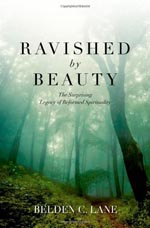
ravishedThis is a short review of Ravished by Beauty, by Belden C Lane (Oxford 2011), which was recommended to me by Peter Harris. In it the author tries to recover the rich theology of nature in the Reformed tradition, which although largely forgotten (to the point of being, I suspect, incredible to some knee-jerk opponents of Reformed Christianity) actually dates back to Calvin himself. Continue reading

Posted in Creation, History, Theology | Leave a comment

Must-read on Feser by Aquinas

I’ve spent a number of posts digging around various bits of Aristotelian-Thomist metaphysics, especially with regard to causation. Notable examples here and the most recent, commenting on a piece by Ed Feser, here.

Why does it matter? Continue reading

Posted in Creation, Philosophy, Science, Theology | 5 Comments

Building bridges from Aquinas to ID

I mentioned in my recent post, linking to Ed Feser’s piece on “finality”, that he “only makes” one brief attack on ID, linking it to William Paley’s natural theology. Given the nature of the essay as an overview, it seems a good source from which to examine how fundamental the differences between A-T thinking and modern Intelligent Design theory really are, and whether an accommodation could be possible or helpful. I’ve attempted this in a small way before but I’ll try to develop it a bit, and repetition isn’t necessarily harmful anyway. Continue reading

Posted in Creation, Philosophy, Science | Leave a comment