The Heptagrammaton

This story in The Independent caught my eye over the weekend. For our transatlantic readers, I should point out that fracking is as unpopular in the UK as GM crops, firstly because we’re so highly populated that it is perceived to be likely to affect back gardens rather than distant wildernesses, which we do not possess. But there was also an unfortunate incident in which a pilot project caused a small earthquake, which has shaken the public confidence more than the bedrock itself. Continue reading
Posted in Politics and sociology, Science | 18 Comments

The Eye of the Beholder

Still on arty-farty stuff, particularly uncritical Hump devotees may be interested to hear that my new album (in somewhat folk idiom), which has been slowly evolving since early summer, is finished and posted as a free stream or download on my main website here. Continue reading

Posted in Music | Leave a comment

The synergism of intellect and imagination

Pursuing the “imagination + intellect” theme, at a less controversial level than recently, here’s a recycling of some sources I used a few years ago to show the complementary value of the two faculties through paired poetry and prose. The original use was to teach my poetically challenged Bible study group to read the Psalms as poetry, rather than as “texts”, so it has nothing to do with science as such. However, there is some danger (I’m sure not shared by any of our contributors or lurkers) that for scientists, “All work and no play makes Jack a dull boy,” as a couple of examples will show: Continue reading

Posted in Philosophy, Theology | 4 Comments

A world of signs and symbols

Over the last couple of months I think I’ve hammered the message that not only science, but even our very basic sensory experience of the world, is inseparable from the world of mind. This ties into the “personal knowledge” concept of Michael Polanyi, the information-based metaphysics of William Dembski and the mind-based one of Arthur Eddington. It relates to the holistic approach to science of Johann Wolfgang von Goethe and his followers. And I’ve even suggested that the world of reality we share with all other life-forms has the character of a common symbolic language giving meaning to an otherwise rather chaotic universe, and so raising the question of whether that symbolic system should be seen as the greater reality, for which the formless “material world” is a mere carrier-wave. Continue reading

Posted in Creation, Philosophy, Science | 7 Comments

Colour me red

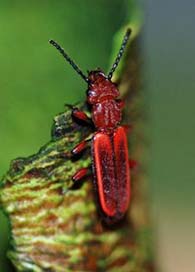
beetleAn unexpected, but very welcome, contributor to my recent post on spectral colour was David Briggs, whose excellent website on colour theory, primarily intended for artists, is an invaluable educational tool for us all (or me, at least). I particularly liked his section on colour vision, which shows just what an incredibly sophisticated visual system we enjoy, as well as how disappointingly little of its workings get into the educational curriculum of either arts or sciences. Check out, for example, the set of “illusions” David uses to show how much neurological processing is involved in maintaining our sense of the constancy of colours under different lighting conditions.  Continue reading

Posted in Creation, Philosophy, Science | 28 Comments

The price of dualism

I’ll leave pngarrison to comment on the interesting paper to which he linked on the last post. Good stuff again – thanks. I’ll just kick off this line of thought with the final sentence of that paper:

We are thus left with a fascinating puzzle as to how an 8-mo-old prelinguistic human not only seems to think of animals as a coherent category but then makes inferences that they alone must have filled insides.

The paper is written from the mindset that this infant concept is somehow the origin of the “folk biology” that animals are integrated wholes, but I would suggest that perhaps the real “folk biology” is more the idea that they aren’t. Continue reading

Posted in Creation, Philosophy, Science, Theology | 22 Comments

More faces in clouds

In our recent discussion on cryptic images and randomness, it was pngarrison who raised the issue of pareidolia – the human tendency to see images, especially of faces, in what are clearly (apart from God’s sense of humour) random patterns. Continue reading

Posted in Philosophy, Science | 7 Comments

The organic and the atomistic

One of the accusations that modern Aristotelians (like Ed Feser) throw at Intelligent Design is that it has an engineering view of biology, and an engineering Deity, the issue being that organisms are actually whole entities that cannot be divided, like human artifacts, into disconnected parts assembled for a function. Interestingly, a good number of Evolutionary Creation voices at BioLogos have echoed that critique (to the point of getting Ed Feser to write some columns). Continue reading

Posted in Creation, Philosophy, Science | 7 Comments

More on seeing what you believe

One of the astonishing examples of theory driving observation in the history of science is how Aristotle’s theory of trajectory was believed by over 2 millennia’s worth of observers – careful philosophers, archers, gunners and small boys playing catch included – until Galileo showed they were all parabolae. How could people be so blind to what every day phenomena were telling them? Continue reading

Posted in History, Philosophy, Science | 14 Comments

The thick plottens

Pngarrison helpfully pointed us a day or two ago to a recent article in the context of the randomness of variation. It does raise some interesting issues from The Hump’s perspective. So I’ll very briefly summarise it in the knowledge that it’s open-access, and those with a better background can bypass my meanderings. Continue reading

Posted in Creation, Science | 4 Comments